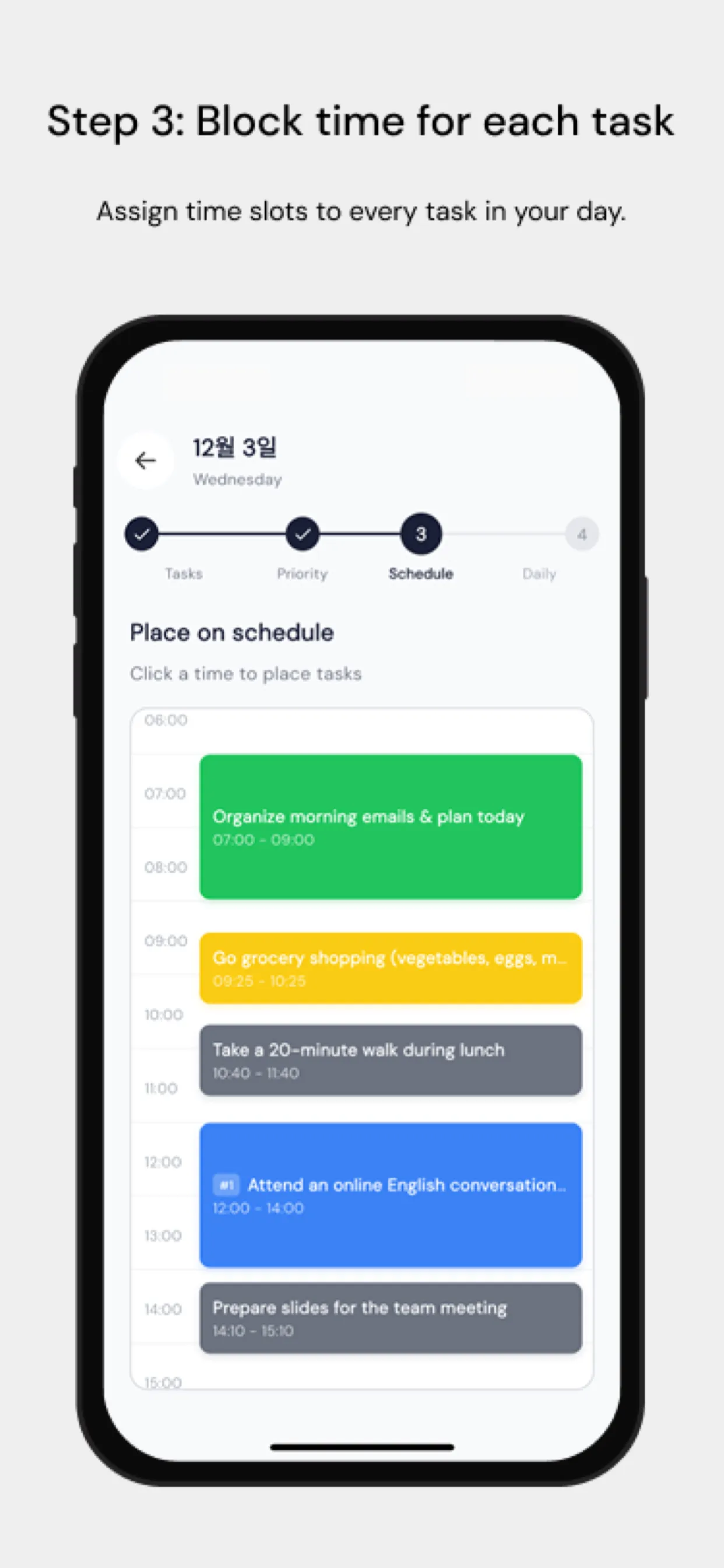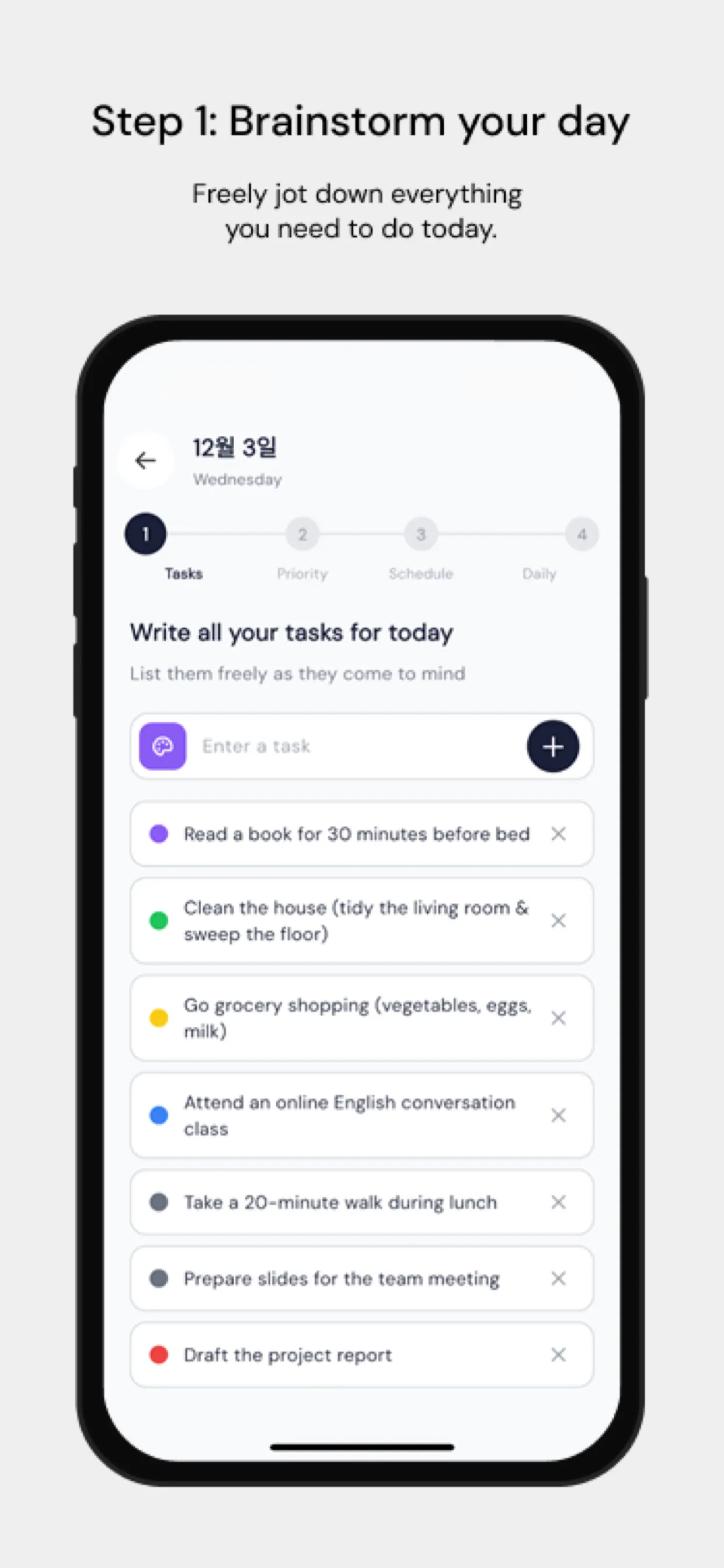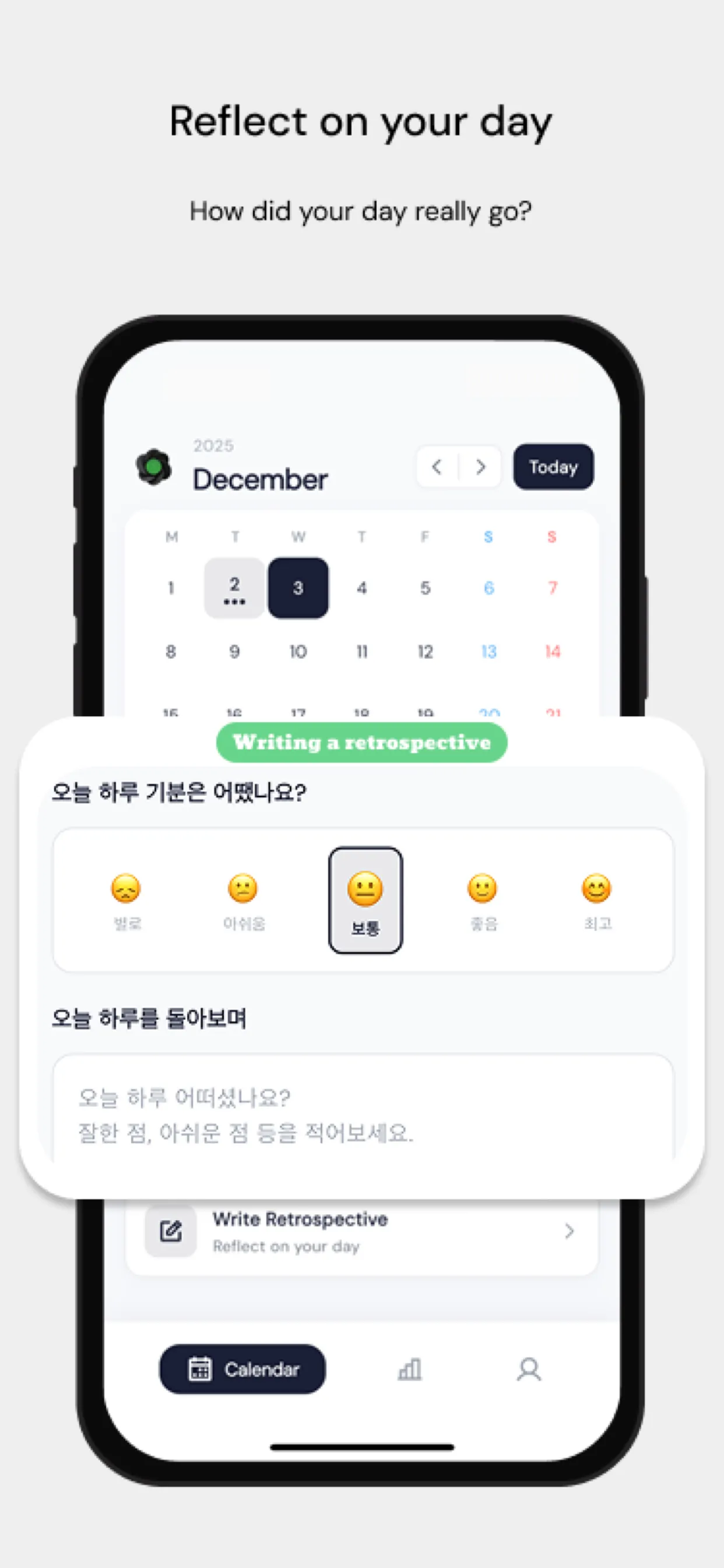
Most advice about timeboxing rests on the same few studies and a lot of personal testimony. We build a timeboxing app, so we can look at something more direct: what actually happens to tasks after people plan them. This page reports what we found in Chrobox usage data — including the parts that are less flattering, and the limits of what the numbers can tell you.
The short answer
Tasks that were given a start time and a duration were marked complete 48.1% of the time. Tasks that stayed on the list without a time slot were completed 17.6% of the time. That is roughly 2.7 times as often.
The difference did not come from a handful of very organized people. When we compared each person with themselves, 35 of 41 people finished more of their time-boxed tasks than their unscheduled ones.
About this data
| Item | Value |
|---|---|
| Source | Anonymized task records from the Chrobox app (iOS and Android), signed-in accounts |
| Period | Tasks dated 3 December 2025 to 29 September 2026 |
| Sample | 5,077 tasks planned by 250 people across 799 planned days |
| Extracted | 30 September 2026 |
- Time-boxed means the task had both a start time and a duration on the day timeline.
- Completed means the person checked the task off. A task someone finished but never checked off counts as not completed.
- We excluded events imported from device calendars, tasks dated today or later, operator and test accounts, and deleted accounts.
- Only aggregate figures are published. No group smaller than 30 tasks is reported.
Finding 1: Time-boxed tasks were completed 2.7× as often
| Tasks | People | Completed | |
|---|---|---|---|
| With a time box | 2,317 | 190 | 48.1% |
| Without a time box | 2,760 | 192 | 17.6% |
Two checks make this more than a headline number:
- Heavy users. The ten most active accounts created 55% of all tasks. With them removed, the gap barely moves: 42.8% for time-boxed tasks against 14.2% for unscheduled ones.
- Same person, both ways. Among the 41 people who planned at least five tasks of each kind, average completion was 52.9% with a time box and 15.0% without. 35 did better with time boxes, 2 did worse and 4 were even.
What this does not prove. This is observational data, not an experiment. People may give time slots to tasks they already intend to do, and a slot also works as a reminder. So the data shows a strong association, not a controlled causal effect. It is consistent with research on implementation intentions: a meta-analysis of 94 studies by Gollwitzer and Sheeran (2006) found that deciding in advance when and where you will act has a medium-to-large effect on follow-through.
Finding 2: Most boxes are an hour, and length matters less than you think
| Box length | Share of boxes |
|---|---|
| 60 minutes | 50.8% |
| 30 minutes | 14.9% |
| 120 minutes | 9.3% |
| 90 minutes | 4.1% |
| 180 minutes | 3.1% |
The median box was 60 minutes. Part of that is the app itself: when a task is dropped onto an hour on the Chrobox timeline, it starts as a 60-minute box, and many people keep the default.
Completion by length is the more useful result:
| Box length | Tasks | Completed |
|---|---|---|
| 15 minutes or less | 35 | 48.6% |
| 16–30 minutes | 429 | 48.7% |
| 31–45 minutes | 56 | 53.6% |
| 46–60 minutes | 1,215 | 48.7% |
| 61–90 minutes | 135 | 50.4% |
| 91–120 minutes | 238 | 45.0% |
| More than 120 minutes | 209 | 44.0% |
Up to 90 minutes, length made almost no difference. Past 90 minutes, completion dropped by about four to five points. Short boxes were not easier to finish than hour-long ones.
Finding 3: Morning boxes get done, evening boxes slip
| Box start time | Tasks | People | Completed |
|---|---|---|---|
| 00:00–04:59 | 43 | 20 | 34.9% |
| 05:00–08:59 | 318 | 81 | 62.3% |
| 09:00–11:59 | 473 | 95 | 52.4% |
| 12:00–14:59 | 448 | 102 | 52.0% |
| 15:00–17:59 | 447 | 102 | 44.7% |
| 18:00–20:59 | 380 | 96 | 40.0% |
| 21:00–23:59 | 208 | 65 | 33.2% |
The pattern is steady: the later a box starts, the less likely it is to be finished. A box starting before 9:00 was nearly twice as likely to be completed as one starting after 21:00. Some of this is who plans early — people who schedule a 6:30 task may simply be more consistent — but the practical advice is the same: put the task you most need to finish before noon.
Finding 4: Past eight tasks, a finished day is rare
The median planned day had 5 tasks.
| Tasks planned that day | Days | Average share completed | Days with every task done |
|---|---|---|---|
| 1 | 131 | 7.6% | 7.6% |
| 2 | 91 | 18.7% | 14.3% |
| 3 | 105 | 29.2% | 14.3% |
| 4–5 | 131 | 26.3% | 13.7% |
| 6–8 | 143 | 42.7% | 18.2% |
| 9 or more | 198 | 30.7% | 0.5% |
Days with 6–8 tasks had the best completion. Days with nine or more tasks finished the entire list once in 198 days. Days with a single task look worst, but many of those are first days — someone trying the app with one test task — so read that row with care.
Finding 5: Priorities help, and Thursday beats Sunday
Tasks marked as a priority were completed 44.5% of the time (853 tasks), against 28.9% for everything else (4,224 tasks).
| Day | Tasks | Completed |
|---|---|---|
| Monday | 940 | 31.4% |
| Tuesday | 854 | 34.2% |
| Wednesday | 990 | 31.9% |
| Thursday | 815 | 36.2% |
| Friday | 612 | 28.6% |
| Saturday | 355 | 27.3% |
| Sunday | 511 | 25.4% |
Midweek was strongest, with Thursday highest. Weekends were weakest, and Sunday was the lowest day of the week.
What we could not measure
- App blocking. Only 19 time-boxed tasks from 8 people had app blocking attached in this period. That is too few to report a completion rate, so we do not.
- Guest mode. Earlier versions of the app offered a guest mode that kept tasks on the device, so those tasks are not in this data.
- Who the users are. 67% of accounts in the sample use the app in Korean and 24% in English. Results may not transfer to every culture or job.
How to use this in your own planning
- Give every must-do task a start time. On the list alone, fewer than one in five tasks got done.
- Keep boxes at 90 minutes or less. Split anything longer into two boxes.
- Put the most important task before noon. Morning boxes were finished far more often.
- Stop at about eight boxes a day. Beyond that, you are planning a day you will not finish.
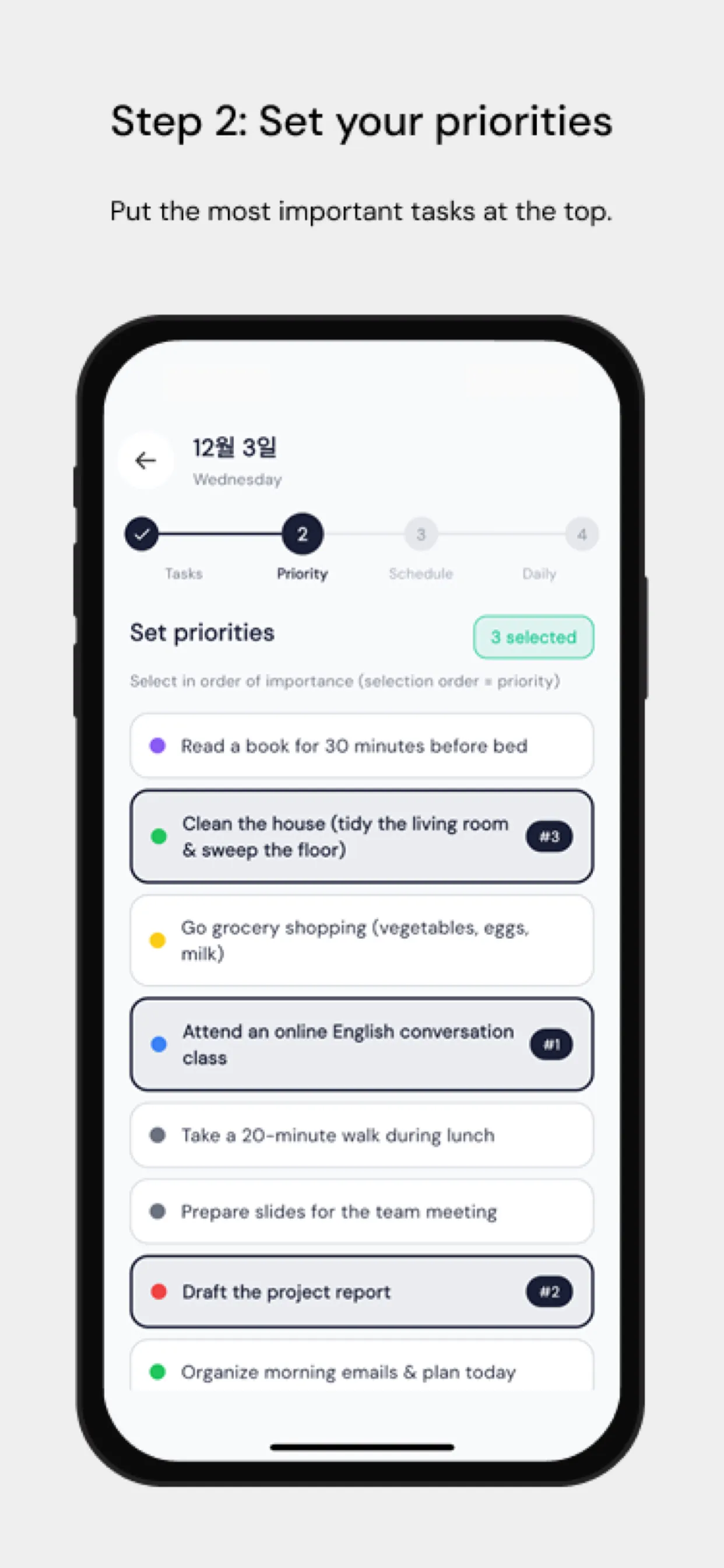
- Mark one to three priorities. Marked tasks were completed noticeably more often.
How to cite this data
Chrobox (2026). Does Timeboxing Work? Completion Data from 5,077 Planned Tasks. https://chrobox.net/blog/does-timeboxing-work — data extracted 30 September 2026.