The fastest daily reflection template is the 3-line reflection: one line for what went well, one for what did not, and one for what you will do tomorrow. It takes under two minutes and removes the excuse of not having time. If you want more structure, KPT (Keep, Problem, Try) and a plan-vs-actual check for time-boxed days are also covered below, along with a simple mood-plus-one-sentence format for your lowest-energy days. Pick the one that matches how much time and energy you have that evening, not the one that looks most impressive.
Why a template matters more than motivation
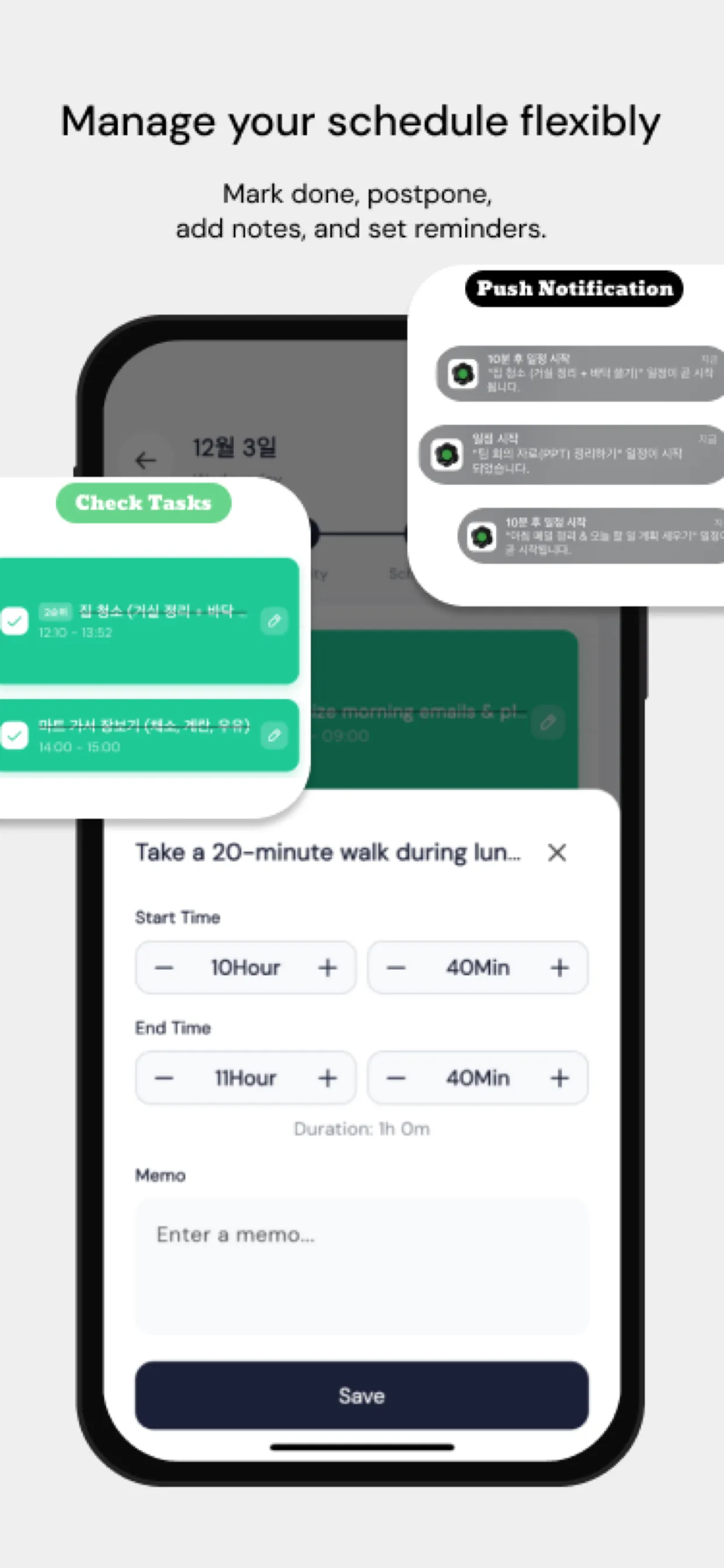
Most people who try to keep a daily reflection habit stop within two or three weeks, not because reflection is not useful, but because they start with no format at all. An empty text box is intimidating every single night, and on a bad day it turns into either nothing (you skip it) or an unstructured vent that leaves you feeling worse. A template solves this by giving you fixed slots to fill in, so the habit does not depend on feeling inspired or having a good day. This is also how Chrobox's own retrospective tab works: a 5-level mood rating (bad, meh, okay, good, great) plus free text, with optional voice dictation for days you would rather talk than type, so the format itself removes friction before you write a word.
Below are four templates. Each has a different trade-off between speed, structure, and what kind of day it fits best.
Template 1: The 3-line reflection
This is the lowest-friction option and the one to default to on busy or tired days.
What went well today, one line What did not go well or felt hard, one line One specific thing to do differently tomorrow, one line
Time needed: 1 to 2 minutes.
When it fits: any day, but especially days when you are tired, traveling, or otherwise short on time. It is also the right format to hand to someone who has never journaled before, since three short lines feel achievable in a way an open page does not.
Common mistake: turning the second line into a list of everything that went wrong. Keep it to one thing. If five things went wrong, pick the one that is most worth addressing tomorrow and let the rest go for tonight.
Template 2: KPT (Keep, Problem, Try)
KPT comes from agile team retrospectives but works just as well for a single person reviewing a single day.
Keep: what worked today that you want to keep doing Problem: what got in the way or did not work Try: one concrete change to try tomorrow, based on the Problem line
Time needed: 3 to 5 minutes.
When it fits: days with enough going on that a single line per section is not enough, or when you are trying to improve a specific habit or workflow over several days and want a running record of what you changed and whether it helped. KPT is more useful than the 3-line format when you are actively experimenting with your routine, because the Try line becomes something you can check against tomorrow's Keep or Problem line.
Common mistake: writing a Problem without a matching Try. A Problem on its own just becomes a complaint you repeat every day. The Try line is what turns the reflection into an actual improvement loop instead of a diary of frustrations.
Template 3: Plan versus actual, for time-boxed days
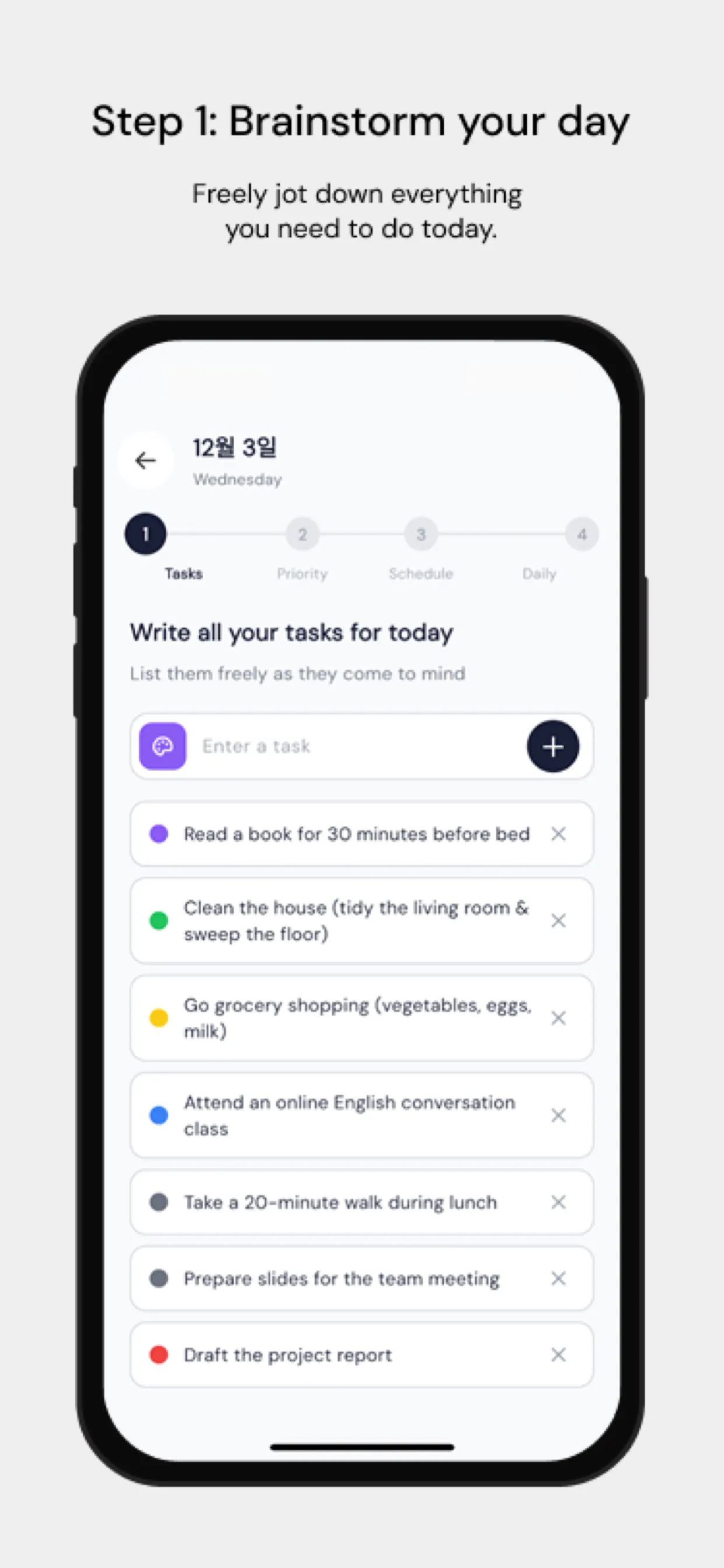
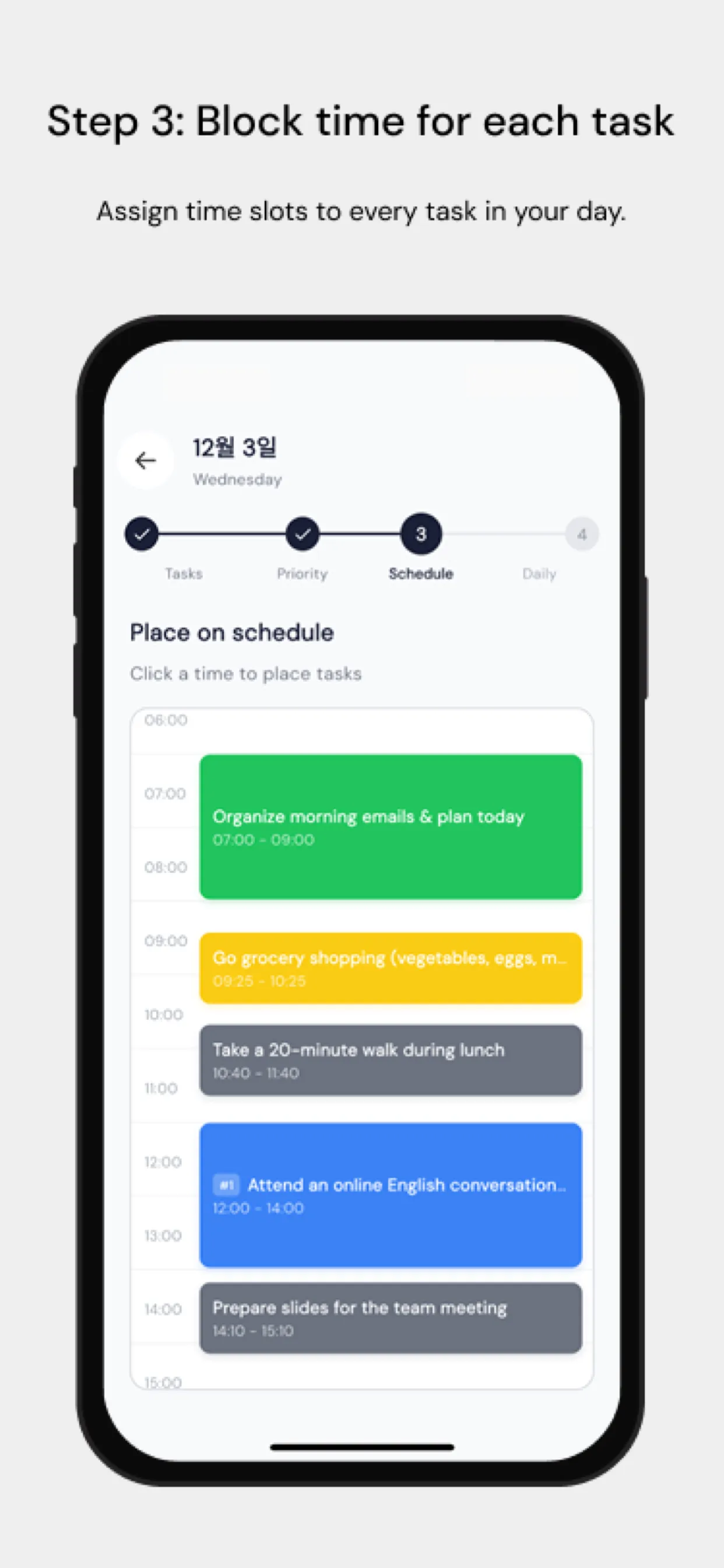
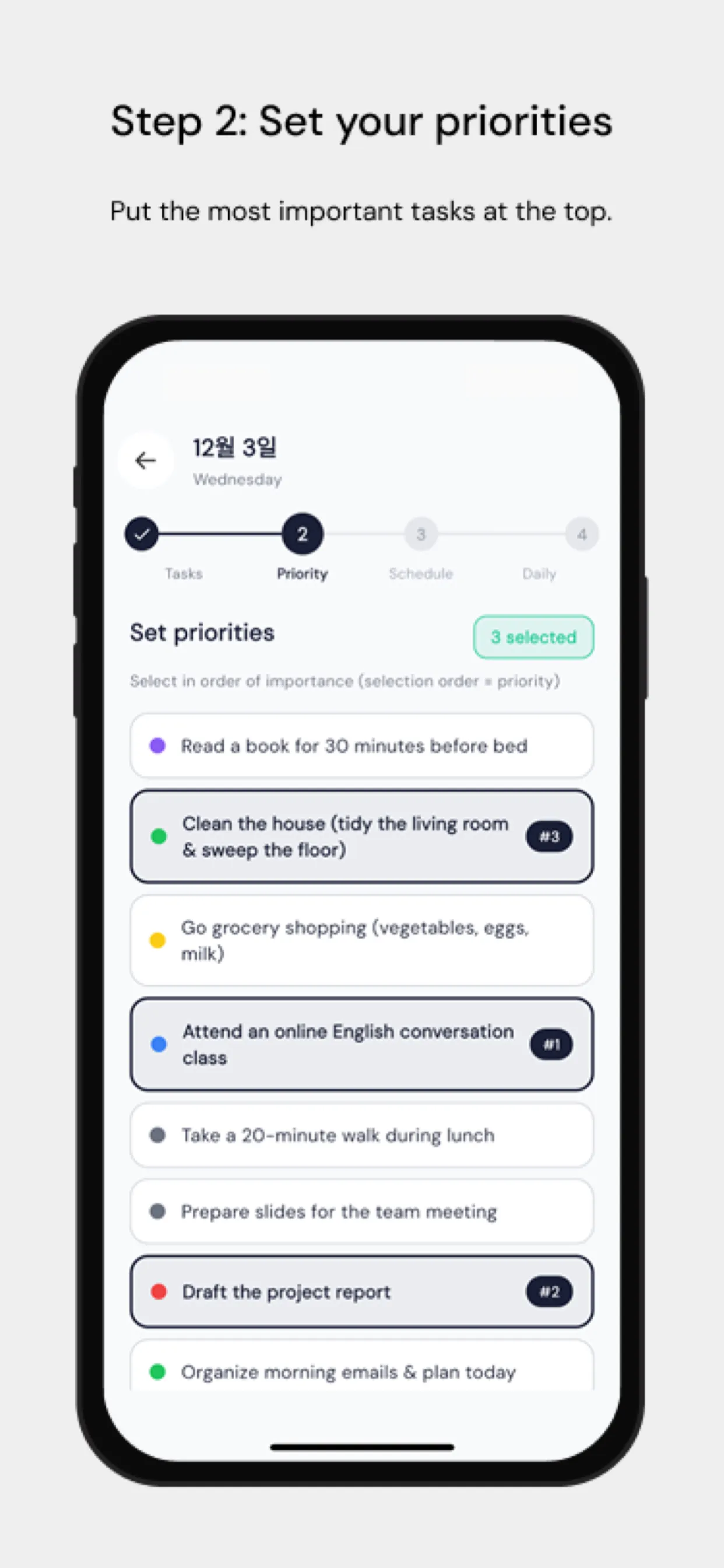
This template is built specifically for people who plan their day into time blocks, whether in a calendar, a planner, or an app like Chrobox.
Boxes planned today: (number) Boxes actually finished: (number) Why the others slipped: (one line per box that did not happen, or one line total if the reason was the same for all of them) One change for tomorrow's plan: (one line)
Time needed: 3 to 5 minutes.
When it fits: any day you planned your time in advance and want to know whether the plan matched reality, which is often more informative than a mood rating alone. If you consistently plan nine tasks and finish two, the problem is usually the plan, not your effort. Chrobox's own usage data across 5,077 planned tasks from 250 people shows that on days with nine or more planned tasks, the whole list was finished only once in 198 days, about half a percent of the time, while a median day has five tasks planned. That is a useful benchmark when you are deciding whether your own plan-versus-actual gap is normal or worth fixing. It is observational data from app usage, not a controlled study, so treat it as a rough reference point rather than a rule.
Common mistake: treating a slipped box as a personal failure instead of a planning signal. If the same type of box slips most days, for example anything scheduled after 9pm, that is information about when you should stop scheduling that kind of task, not evidence that you lack discipline.
Template 4: Mood plus one sentence
For the days when even three lines feels like too much.
Mood: (pick one word or a 1 to 5 scale) One sentence about today
Time needed: under 1 minute.
When it fits: your lowest-energy days, or as a fallback so the streak does not break entirely. A short entry that keeps the habit alive is worth far more than a skipped day, since the hardest part of any daily practice is usually restarting it after a gap. Writing even one sentence gives you something to look back on later that a mood score alone does not.
Common mistake: skipping the entry entirely because it feels too small to bother with. A one-sentence entry on a bad day is still a data point, and looking back at a month of even short entries usually shows patterns that no single day would reveal.
Choosing between the four
Use the 3-line format as your default. Switch to KPT on days when you are actively trying to fix something specific, since the Try line gives you something to follow up on. Use the plan-versus-actual format on days you time-boxed your schedule, since it tells you whether the plan itself needs adjusting. Fall back to mood-plus-one-sentence on your hardest days, just to keep the habit alive rather than letting a gap turn into weeks of not writing at all. There is no wrong choice here; the only real mistake is treating any one of them as mandatory every single day.
Common mistakes across all four templates
A few problems show up regardless of which template you use.
Turning it into self-criticism. A reflection that only lists faults trains you to dread the habit. Every template above pairs a negative observation with a forward-looking action, which is intentional. If you notice your entries are mostly complaints about yourself, add a "what went well" line even to KPT or the plan-versus-actual template.
Writing too much. Long entries take longer to write and even longer to review, which means you stop reviewing past entries, which is half the point of keeping them. If an entry is taking more than five minutes, you have probably drifted from reflection into venting. Save the venting for somewhere else and keep the reflection short enough that you will actually reread it.
Skipping the habit entirely on bad days. This is the single most common way the habit dies. Bad days are exactly when a quick mood-plus-one-sentence entry matters most, both because you need the outlet and because a string of bad days is worth being able to see later.
Where this fits with an app
You can run any of these four templates on paper, in a notes app, or in a dedicated tool. If you already plan your day in time boxes, Chrobox keeps the plan and the daily retrospective in the same app, so the plan-versus-actual template takes a minute: the boxes you planned and the ones you checked off are already there. Entries also build a writing streak and, on Chrobox Pro, feed an automatic daily and weekly analysis with an optional AI comfort message on an entry, so the small daily habit compounds into a longer-term view without extra manual work. None of that is required to benefit from these templates, though. A sticky note and two minutes work just as well as any app.
Building the habit
The template matters less than showing up with any template at all, most evenings, for a few weeks. Pick the one that matches tonight's energy rather than aiming for your most thorough entry every time, and treat a short entry as a full success rather than a lesser version of a long one. The goal of a daily reflection is not a perfect record; it is a habit you actually keep, because a habit you keep for a month tells you far more about your days than a single detailed entry ever could.