Scheduling & Routines
Daily, weekly, and rhythmic scheduling patterns that build sustainable routines.
8 articles
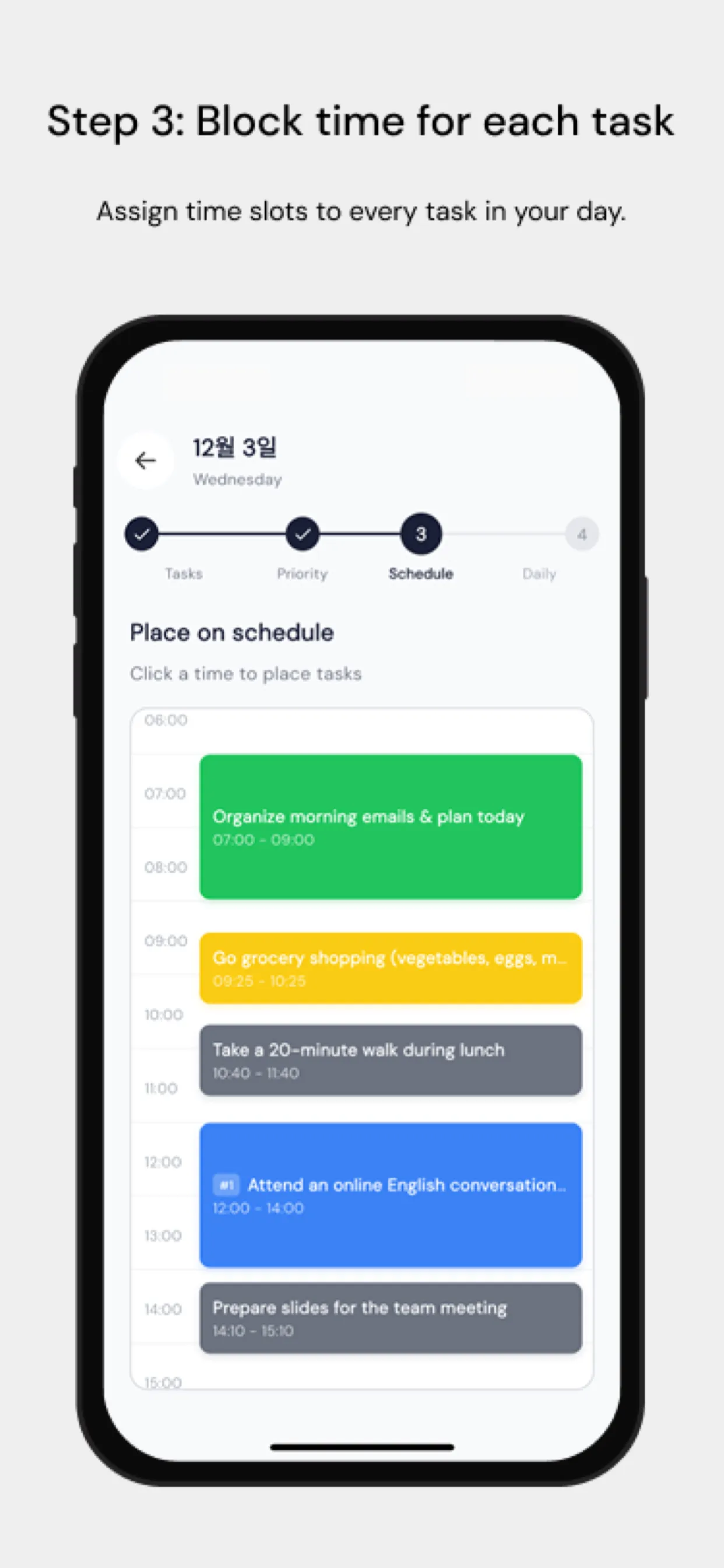
A single well-planned day is easy. Repeating it for three months is the hard part, and that is what scheduling and routines are for. A routine is a decision you only have to make once: the shape of your morning, the hour you review the week, the block you never book meetings into. Once those are fixed, your daily planning shrinks from "what should I do with twelve hours" to "what goes in the three open slots," which is a question you can answer in two minutes instead of twenty.
The guides here work outward from the day. Morning routine scheduling covers the first ninety minutes — the block with the least interruption and the most cognitive capacity, and the one most people spend on email. Weekly planning zooms out to the horizon where real priorities live, so Monday does not start with a blank page. Deep work scheduling deals with the practical problem of protecting long uninterrupted stretches inside a calendar other people can write to. The daily review ritual closes the loop: five minutes at the end of the day comparing what you planned against what actually happened, which is the only reliable way to make your time estimates accurate.
Three further guides address the constraints that break otherwise good schedules. Energy management explains why identical blocks produce very different output depending on where they sit in your day, and how to match task type to your own energy curve rather than to the clock. Digital minimalism scheduling looks at what to remove — notifications, standing meetings, apps that consume attention without returning anything. Work-life balance and remote work scheduling both tackle the boundary problem: when home and office are the same room, the boundary has to be a time, because it can no longer be a place.
The common thread is sustainability over intensity. A routine you keep at seventy percent for a year beats a perfect system you abandon in February. Chrobox supports that with recurring blocks, routine streak tracking, and a weekly AI review that shows which parts of your schedule you actually kept — but the patterns in these guides work with any calendar.