Why Work-Life Balance Is a Scheduling Problem
Most conversations about work-life balance focus on mindset or culture. But underneath every imbalance is a scheduling problem: work expands into personal time because there are no clear boundaries encoded in the calendar. Time-boxing solves this at the structural level.
The Boundary Paradox
Many people intend to stop working at 6 PM but find themselves checking email at 10 PM. The intention exists; the structure does not. Without explicit time boxes for personal activities, work always wins — because it has an endless supply of tasks, urgency, and social pressure.
The solution is to treat personal time with the same structural formality as professional commitments.
How to Build a Balanced Time-Boxed Schedule
1. Start with your non-negotiables. Before scheduling work, block your core personal commitments: sleep, meals, exercise, family time. These are the foundation, not the afterthought.
2. Apply the Energy Mapping principle. Schedule your most demanding work during your peak energy hours (typically morning for most people), and lighter tasks or meetings during natural energy dips. This prevents using personal time as overflow for procrastinated work.
3. Create a hard stop ritual. At the end of your last work time box, spend 10 minutes processing your inbox, updating your task list, and writing your top 3 priorities for tomorrow. This psychological closure signals to your brain that work is done.
4. Build transition time boxes. Between work and personal time, schedule a 15-30 minute transition activity — a walk, a workout, a brief meditation. This prevents work stress from bleeding into personal hours.
5. Schedule recovery, not just rest. Rest is passive (watching TV); recovery is active restoration (exercise, social connection, hobbies). Time-box recovery activities to ensure they actually happen.
The 80/20 Availability Rule
Not all work time needs to be equally accessible. Consider making 80% of your work time box hours fully focused (notifications off, status set to "Do Not Disturb") and 20% open for collaboration and response. This structure dramatically reduces the pressure to be constantly available, which is one of the main drivers of work bleeding into personal time.
Using Chrobox for Work-Life Balance
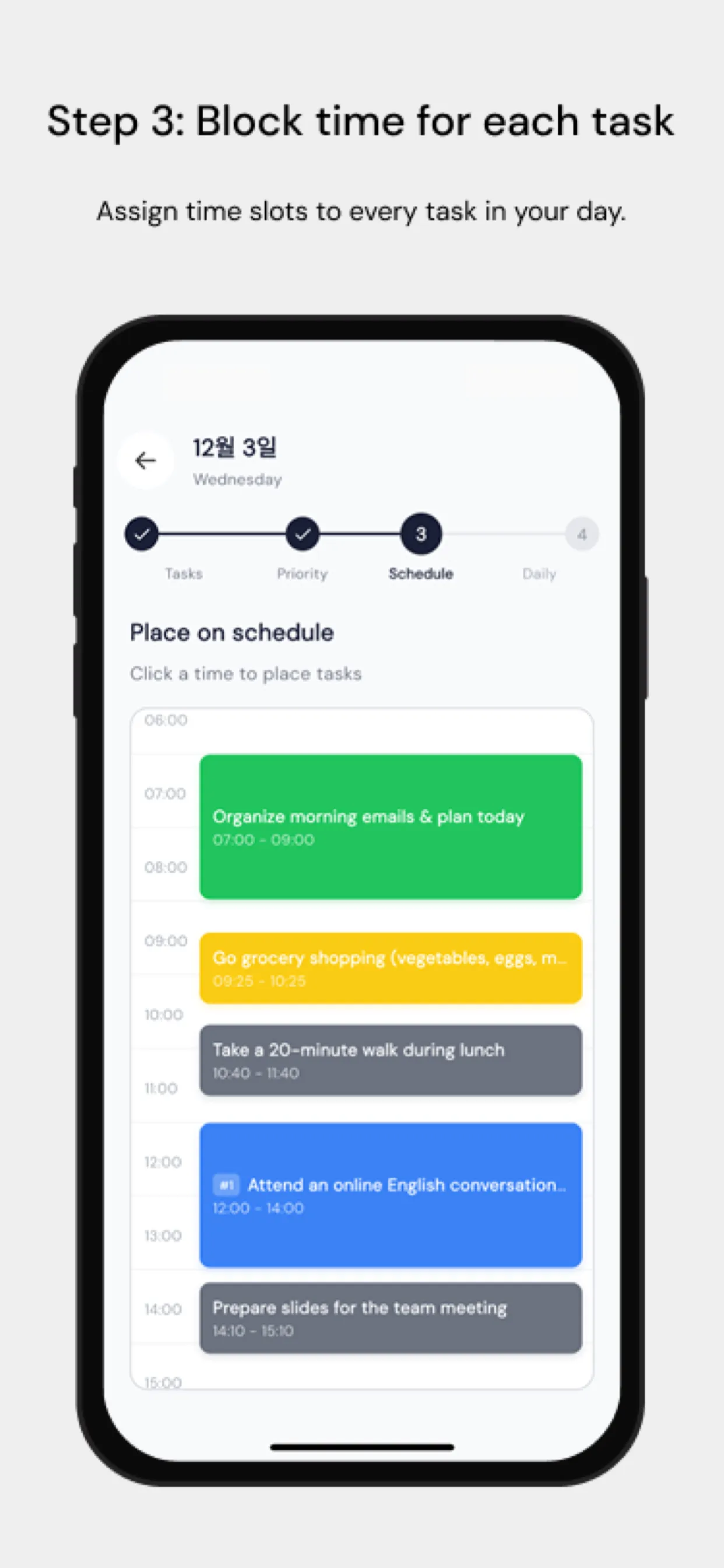
Chrobox allows you to color-code time boxes by life domain — work, health, family, personal development. When you view your week, you get an immediate visual signal of whether your time allocation matches your stated priorities. If the work color dominates, you can rebalance before the week starts, not after it ends.
The Long Game
Work-life balance is not achieved in a single good week. It is built through consistent scheduling habits that compound over months and years. Time-boxing gives you the daily practice that makes this possible — one structured day at a time.
Commit to a 30-day experiment: time-box at least two personal commitments per day, treat them as non-negotiable, and measure your stress and satisfaction at the end of the month.